If you care to know what I mean by “working hard,” go ahead and visit the CSPI.org website and use the search function to search for “seed oil” and I think you’ll get it. Among the more ridiculous articles on the site include “Is beef tallow really healthier than seed oils?,” “Seed oils: Are they healthy or harmful?,” “The good fats” and “What’s the healthiest ‘butter’? Spoiler: It’s not butter” to name just a few. I won’t link to them since I do not want to boost the popularity of pages with information that is so inaccurate and potentially harmful to people’s health.
I reached the conclusion that the consumption of seed oils is absolutely horrific for human health and have been avoiding them for at least five years. During that time more and more people have concluded similarly and that is why products boasting “no seed oils” and featuring alternative non-seed oils have been showing up on store shelves. Apparently, CSPI is still living in the 1990s and they remain committed to the old “cholesterol is bad” dogma that has long been proven to be a lie. It’s hard to believe that in 2026, an organization that claims to be working for the “public interest” is still championing a cause so ludicrous that it challenges my ability to believe it’s real.
The article that brought CSPI to my attention was an article entitled “9 health buzzwords that help sell foods and supplements.” It rather randomly popped up in a news feed and I could not help wonder if they were going to treat the “no seed oils” position in a negative way. Sure enough, their third point attacks the idea that seed oils are unhealthy. As expected, the writer, Lindsay Moyer, MS, RDN, actually contends that seed oils are healthy with this, among other similarly ludicrous statements:
“But despite what you may have heard, decades of research show those “seed oils” are all sources of unsaturated (good) fats. And claims that the oils are inflammatory don’t stand up to scrutiny.” (the word “scrutiny” is liked to another ridiculous article entitled “Seed oils: Are they healthy or harmful?”)
I suppose Ms. Moyers credentials and impressive designations following her name are intended to convince the unwashed masses that she knows what she is talking about. Unfortunately, that assumption these days is tenuous at best. Let’s not forget the myriad health professionals with even more impressive credentials that lied to the public time and again during the Covid crisis. Does the name Anthony “5th Amendment” Fauci mean anything to you?
Moving beyond meaningless credentials, let’s take a look at the “scrutiny” that would disprove the claim that seed oils are unhealthy. They back that up with studies that do not actually prove anything, as we shall see.
A particularly amusing declaration contained in this “scrutiny” is the following: “Taken together, the research makes it crystal clear that seed oils are healthy, not harmful.”
Not so fast, CSPI. Let’s switch into research mode and take a closer look:
The papers they lean on do not prove that seed oils are healthy. They mostly show that people who report using more plant oils, or who have higher circulating linoleic acid, look better on paper than people who report more butter, and that swapping saturated fat for linoleic-rich oil usually drops LDL cholesterol. Those are not the same as proving refined soybean, corn, canola, sunflower, and safflower oil are benign in the doses and forms Americans actually eat.
Here is how the cited evidence comes apart if you start from the view that high linoleic acid (LA) intake is a problem.
The 221,000-person mortality study is not an experiment
CSPI’s centerpiece is the 2025 JAMA Internal Medicine analysis of the Nurses’ Health Study, Nurses’ Health Study II, and Health Professionals Follow-up Study. People with the highest reported plant-oil intake had lower mortality. A modeled swap of 10 grams of butter a day for plant oils was linked to a 17 percent lower risk of death.
That is an observational food-frequency study in mostly white health professionals. Diet was estimated from questionnaires every four years. The “replacement” effect is a statistical substitution in a Cox model, not a trial in which anyone actually swapped butter for soybean oil for 33 years. The authors themselves list residual confounding, measurement error, limited generalizability, and underreporting of non-olive oils. They did not cleanly isolate home-cooked seed oil from the rest of a health-conscious pattern, and they did not adequately control fried food or ultra-processed food as a class.
Olive oil is lumped into “plant-based oils,” then CSPI treats the package as a defense of seed oils. Olive oil is not a high-LA industrial seed oil. Canola and soybean showed inverse associations too, but corn and safflower did not come through cleanly, in part because intake was low and intervals were wide. Even the CVD-mortality signal for the butter-to-oil swap was weaker than the total-mortality and cancer numbers. None of that can tell you whether decades of linoleic-rich frying oil, packaged snacks, and restaurant vats are safe. It can tell you that people who say they use olive, canola, or soybean oil, and who already work in health care, die less often than people who say they use a lot of butter. Healthy-user bias is not a footnote here. It is the study design.
The AHA advisory is a selected reading of old diet-heart trials
CSPI next leans on the 2017 American Heart Association Presidential Advisory: the “best intervention studies” show heart disease rates nearly 30 percent lower when animal fat is replaced with plant oils, “primarily soybean oil.”
That 30 percent figure is not a modern, well-controlled test of today’s refined seed oils against butter or tallow. It is a narrative built from a small set of mid-century trials, with “cardiovascular events” as the favored endpoint. Critics, including Nina Teicholz (she’s a PhD but I won’t hold that against her since she actually makes sense) and others who re-examined the same literature, have pointed out that the advisory leaned on four trials and set aside the largest randomized test of the hypothesis, the Minnesota Coronary Experiment, on duration grounds, along with the Sydney Diet Heart Study. Both of those linoleic-acid interventions lowered cholesterol. Neither produced a mortality win. In recovered Minnesota data, a larger cholesterol drop tracked with higher risk of death. Sydney showed higher coronary death on the high-LA diet.
If you care about living longer rather than having a lower lab LDL, those recovered RCTs are the opposite of “crystal clear.” Meta-analyses that insist on hard endpoints (total death, CHD death) in trials that actually replaced saturated fat with LA-rich oils have repeatedly failed to show a mortality benefit. LDL went down. People did not clearly live longer. That is the core diet-heart problem CSPI never wrestles with. Lower LDL is treated as a finished proof of health. It is a surrogate.
The advisory also sits inside a long institutional history. The AHA helped popularize polyunsaturated oils decades ago. Citing the AHA as the referee on seed oils is a bit like asking the league office to review its own rulebook.
“No inflammation” means no change in a few blood markers
CSPI says an analysis of 30 randomized trials found that eating more linoleic acid was not linked to higher inflammatory markers. That is Su et al., 2017, 1,377 people, looking at CRP, IL-6, TNF, and similar circulating proteins.
Two problems. First, the same paper’s subgroup and meta-regression suggested that a larger increase in dietary LA went with higher CRP. CSPI omits that. Second, short-term shifts in serum cytokines are a weak stand-in for the actual concern: linoleic acid packed into LDL and membranes, then oxidized. The compounds people who distrust seed oils talk about are oxidized linoleic acid metabolites (OXLAMs), 9- and 13-HODE, 4-hydroxynonenal, and oxidized LDL particles, not a two-month CRP kit. You can leave CRP flat and still have a more oxidizable fatty-acid pool. This meta-analysis does not measure that pool, does not measure frying-derived oxidation products, and does not follow clinical disease.
Higher blood linoleic acid is not the same as “seed oil is good”
The Circulation pooled analysis of about 30 cohorts (Marklund et al., 2019) found higher circulating or tissue linoleic acid, and sometimes arachidonic acid, associated with lower CVD risk. CSPI mentions Unilever funding. That conflict is real and should stay on the page.
The deeper problem is biological interpretation. Blood LA is a biomarker, not a receipt from the soybean industry. People with metabolic disease often have lower circulating LA because they burn or remodel it differently. Higher LA in phospholipids can mark a healthier person as easily as it marks a high-oil diet. Observational biomarker studies cannot separate “this person eats well, exercises, and is not insulin resistant” from “this person drinks soybean oil.” They also do not test reused deep-fryer oil, which is the form that dominates the American seed-oil supply.
If LA were simply cardioprotective in a dose-dependent way, the recovered high-LA RCTs should have shown it. They did not.
The 0.2 percent conversion argument answers the wrong question
CSPI says only 0.2 percent of dietary linoleic acid becomes arachidonic acid, and that trials slashing LA by 90 percent or raising it six-fold left blood AA unchanged (Hussein 2005; Rett and Hibbeln-adjacent 2011 review).
That is expected on a Western diet that is already LA-saturated. Conversion of LA to AA is tightly regulated. The critic’s case was never “every gram of soybean oil becomes a gram of AA.” It is that we already eat historically unprecedented amounts of LA; extra LA still occupies membranes and lipoproteins; LA itself is the fatty acid most prone to peroxidation; and high LA competes with omega-3 fats for the same enzymes even when plasma AA barely moves. Showing that phospholipid AA is stubborn does not show that OXLAMs, oxidized LDL, or the n-6/n-3 balance in tissues are irrelevant. It shows one downstream metabolite is buffered.
 Monkey arteries and LDL trials prove a mechanism, not a food
Yes, replacing saturated fat with polyunsaturated fat lowers LDL in people. Yes, some primate work found less atherosclerosis on PUFA diets than on saturated-fat diets. Those findings are not imaginary. They are also not a safety trial of industrial seed oils as currently refined, stored, and heated. Species, dose, background diet, and duration all differ from a lifetime of packaged food fried in linoleic-rich oil. And again, the human RCTs that used that mechanism in real patients did not deliver a clean mortality benefit.
Oxidation is waved away with bottle-stability
CSPI’s expert line is that refined oils still contain tocopherols, so they do not go rancid in two days on the shelf. That is a shelf-life argument. It is not an argument about what happens when the same oil is held at frying temperature, reused, or incorporated into LDL particles that sit in an artery wall for years. Neutral-tasting refined oils exist because industry wanted a cheap, high-smoke-point fat for frying and formulation. Tocopherols in the bottle do not cancel lipid peroxidation in vivo or in a restaurant vat.
CSPI also treats seed oils as innocent bystanders in ultra-processed food: the problem is the sugar, salt, and flour, not the oil. Maybe. You cannot know from the papers they cite, because those papers never isolate the oil inside the ultra-processed pattern. Guilty-by-association is a weak prosecution. Innocent-by-association is a weak defense.
What this leaves you with
If you believe seed oils are harmful, you do not need CSPI’s studies to be fraudulent. You need them to be the wrong kind of evidence for the claim being made. They are.
- Observational oil-vs-butter studies cannot beat confounding.
- Selected old RCTs plus LDL change cannot beat recovered trials where cholesterol fell and people did not do better.
- Null short-term CRP results cannot beat a peroxidation and OXLAM hypothesis those papers never tested.
- Stable blood AA cannot beat the fact that LA is already at industrial doses in the food supply.
- Industry-adjacent biomarker pooling cannot turn correlation into a cooking recommendation.
The honest reading is narrower than CSPI’s. Replacing butter with unsaturated fat often lowers LDL. People who report more plant oils in elite cohorts die less. Circulating LA is not a poison marker in those cohorts. None of that establishes that high-linoleic refined seed oils, especially when heated and eaten at modern volumes, are healthy. “Crystal clear” is a slogan. The data are still a fight over surrogates, substitution models, and which old trials count.
Given the utterly bogus information CSPI is spewing like a firehose, I decided to conduct another search on their site with the keyword “vaccine.” I rather wish I had not. At the same time, it really yanks the mask down from this organization, which clearly is no more than a shill for the usual suspects: The Medical-Industrial Complex (Including Big Pharma) and their good friends over at Big Food.
What other conclusion can one reach in the face of articles with titles like these: “Vaccines don’t cause autism. Here’s how we know,” “The childhood vaccine schedule is safe and saves lives,” “Even small drops in vaccination rates for US children can lead to disease outbreaks” and “Covid-19 vaccines: an interview with Dr. Anthony Fauci.”
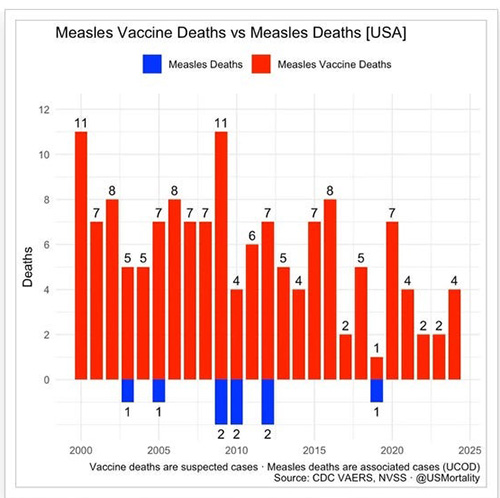 Oh, my heavens, where to start? Apparently CSPI “knows” vaccines cannot cause autism. Thanks for clearing that up for us! And apparently the absolutely ridiculous number of poison-containing vaccines that are recommended during childhood are safe. End of story. Looks like CSPI solved that one for us as well!
And let’s not leave out the pro-Big Pharma scare tactics that tell us that the world will come to an end if you don’t get your “recommended” vaccines. Refuse to get your kid the measles shot and you can expect your town to be wiped out by a measles outbreak!
And now for the coup de grâce! The fact that CSPI had the stones to interview Anthony Fauci, the lying, disgraced egomaniacal former head of the NIAID tells us a lot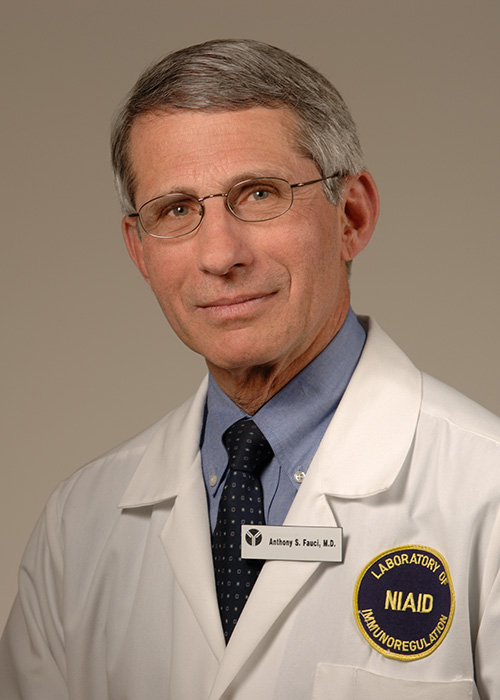 more about who CSPI actually is. The “S” in their name stands for “Science” and this abomination makes clear that they subscribe to the same brand of “Science” as does Anthony Fauci. (I won’t reference someone who has done as much harm as he has as a “doctor”)
Digging a little deeper, we find that the CSPI does a pretty good job of making themselves appear to a benevolent nonprofit organization that exists to promote the public good by providing helpful information and advice based on science. What could be wrong with that? Let’s find out and to do that, we’ll take the advice of whatever clever individual coined the phrase, “follow the money.”
Their financials reveal that they earn a portion of their revenue through subscriptions and other activities but that is a pretty small portion of what they take in. Propublica also reveals a total of $11,403,487 was received in the form of “Contributions” during 2025 and that is the lion’s share of their income by far. What’s unfortunate is that they are not required to provide details about who contributed those donations. My guess is that not a whole lot of them are coming from middle-income Americans but who knows, I could be wrong. But I doubt that. A lot.
While CSPI states that they do not accept funding from industry or government sources but they do receive donations from “private foundations” and those are lumped in with that $11 million dollar amount above. While those private foundations are not revealed, there are some hints from the past. Britannica reveals that past donor foundations include the Robert Wood Johnson and Rockefeller foundations. Nothing to see here, apparently.
Holy Moly, a whole other post could be devoted to the history of the Rockefeller Family and their alleged foundation’s stated purpose to “alleviate human suffering worldwide.” Sadly, quite the opposite is true and “Rockerfeller Medicine” is largely responsible for the corrupt Medical-Industrial Complex we have today that places profit far above any efforts to alleviate human suffering.
And what about this Robert Wood Johnson Foundation? Surely, it must be another benevolent organization created for the purpose of helping people, right? Perhaps a closer look at the name of this foundation will provide a clue. Does the name Johnson mean anything to you? It might help if I repeat it. Johnson and Johnson.
Yes, this is the foundation established by Robert Wood Johnson II, the son of Robert Wood Johnson I, one of three bothers who founded the pharmaceutical and healthcare giant Johnson & Johnson. With a stated purpose “to transform health in our lifetime,” this foundation surely has contributed mightily to that end. As you may recall, Johnson & Johnson was the creator of one of the Covid-19 “vaccines” that was discontinued due to “side effects” that included blood clots and Guillain-Barré syndrome. There’s a “transformation” for you.
Those revelations are interesting but aren’t evidence that CSPI is controlled by these foundations. However, it is kind of interesting to take another look at a few more on CSPI’s own site where I discovered a section where they list the donations received from foundations between 1971 and 2009.
Since there are far too many foundations for me to list individually, I thought it might be interesting to list the top five that have appeared most frequently. In the number one spot we find the Rockerfeller Family, which is not the least bit surprising since we already know about their influence on health and medicine. Their foundations made a total of 14 donations to the the CSPI but the data only extends as far as 2009 and I am willing to bet they have donated many more times since.
In the number two spot we find the Louis & Anne Abrons Foundation and they are responsible for ten donations. There does not seem to me anything particularly interesting about this family other than the fortune they made in New York real estate.
The number three spot is occupied by our old friends at the Robert Wood Johnson Foundation who made a total of nine donations and we already know what they’re all about.
At number four we fund the Saperstein Family Fund with nine total donations and this one is interesting not because the money seems to have originated with Guy Saperstein’s legal career and more because they have donated to organizations that could be considered similar to CSPI. Specifically, they donated to the Edible Schoolyard Project, an organization that is associated with Alice Waters that is heavily focused on food education, school food and food-system issues. Since donating to an organization like CSPI might reasonably presume that the donor agrees with all or much of what CSPI promotes, I think I have a good idea about what kind of “healthy” eating practices this organization promotes in schools and elsewhere. Seed oils anyone? If Alice waters does not believe seed oils are healthy, I suggest she disassociate herself with CSPI.
Sitting in the number five spot with nine total donations is the Wallace Genetic Foundation. The name might be a good hint and indeed it is. As the name suggests, this foundation has connections to a company called Pioneer Hi-Bred and that company was working on genetically engineered crops. Pioneer was eventually sold to DuPont for around $10 billion but it tells us a little bit about the foundation’s position where generically engineered food is concerned. And that’s an issue that the CSPI assures us is nothing to worry about (see number 9 — I’ll make an exception and link to them this time).
Even if some of the foundations donating to CSPI have little or nothing to do with the Medical-Industrial Complex or Big Food, what their donations tell us is that they agree with what the organization is doing. Their donations could be considered a nod of approval. Considering that CSPI is pushing unhealthy seed oils and unnecessarily injecting poison concoctions into the bodies of the nation’s children, these foundations align themselves with those goals.
Many of the foundations donating to CSPI probably have nothing to do with “healthcare” or food production and may just be misinformed about what practices really lead to good health. However, others are indeed deeply involved in industries related to medicine and agriculture and have profited handsomely from those endeavors. They are the ones that realize a benefit from organizations like CSPI pushing their propaganda out for public consumption. If people believe that seed oils are healthy, vaccines are safe and effective and GMO food products are perfectly safe they are going to purchase those foods and submit to those vaccines. Profits follow for the companies making those things available and that is what drives the entire system — including CSPI.
Let’s get back to seed oils for a moment because I have direct, personal experience in that area. I happen to know that what CSPI and other seed oil shills say is false. I cut back on anything containing seed oils quite dramatically about five years ago. Since then my health has only improved. I lost about 20 pounds without doing anything except eliminating seed oils almost entirely from my diet.
I had read some time ago that the consumption of seed oils made people more prone to sunburn. I was not sure about that one but I became a believer last summer when I found that I was able spend 30 minutes shirtless outside on a sunny day and only got the slightest hint of a sunburn. Before I reduced seed oils I would have burned after that amount of time without question. I am not a product of ancestors that resided anywhere near the equator. I have not taken the time to research how this whole sunburn resistance thing happens but I seriously doubt it is telling me that seed oils are good for me.
Organizations like CSPI are not what they appear to be. Like any organization with millions of dollars flowing into it, they have to be influenced by money. It’s clear that they are not influenced by any desire to dispense information that is only helpful for people who desire to be healthy.