Walk the meat aisle of a typical supermarket and it looks like a competitive market. There are house brands, national brands, family-pack trays, and a wall of ground beef. It is not a competitive market. Behind those labels sit four companies that slaughter and pack the large majority of U.S. fed cattle: JBS, Tyson Foods, Cargill, and National Beef. Together they handle roughly 80 to 85 percent of that processing. In 1980 the top four packers accounted for about 36 percent. The bottleneck is now the business model.
Two of those four are foreign-owned. JBS USA is the American arm of JBS S.A. of Brazil, controlled by the Batista family through J&F. National Beef is majority-owned by Brazilian parent Marfrig, now operating under the MBRF combination. Tyson is a U.S. public company. Cargill is a privately held U.S. giant. Pork is a separate pile-up. Smithfield, still the biggest name on American bacon and ham, remains majority-owned by Hong Kong-based WH Group after its 2013 takeover. So when someone tells you the protein on the foam tray is “just American meat,” ask who cashes the check at the plant.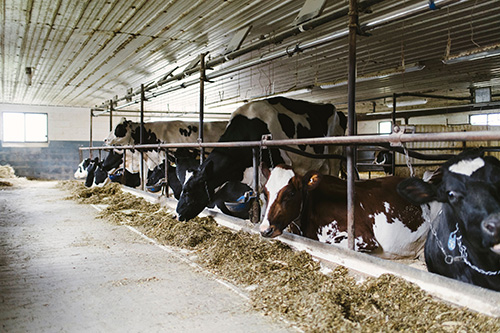
Oh, and by the way, does the name “Hong Kong” mean anything to you? It was a British colony for a century-and-a-half and was ceded to China in 1997. Yes, Communist China, one of the cruelest, most brutal and totalitarian regimes on the planet. How do you feel about buying your meat from a company aligned with the following: Oppression of the Uyghurs and other religious minorities. Forced assimilation of Tibetans. Arbitrary detention and enforced disappearance. Forced labor. To name just a few.
The concentration of this industry is not an accident of efficiency. It is what happens when slaughter capacity, feedlot relationships, boxed-beef sales, and export channels collapse into a handful of firms that can bid for cattle in thin local markets and sell finished product into a grocery system that needs volume every week. Ranchers in much of the country now face two to four serious buyers, sometimes one. Alternative marketing agreements lock a growing share of cattle to a specific packer before the animal ever hits an open auction. The Packers and Stockyards Act of 1921 was written because an earlier generation of packers abused exactly this kind of gatekeeping. Enforcement has not kept pace with the mergers.
Call that structure what it is. When four firms sit on both sides of the transaction, they can squeeze the rancher on the way in and the shopper on the way out. The producer’s share of the retail beef dollar has been a long fight. In the early 1970s, when packing was far less concentrated, far more of the consumer dollar stayed with cow-calf operators, stockers, and feedlots. As the four-firm share climbed toward 85 percent, that split shifted toward packers and retailers. The companies will say tight cattle inventories, drought, and retail markups explain high prices. Those things matter. They do not explain why so few plants stand between a live animal and a wrapped steak.
The legal record does not inspire trust. J&F, the holding company behind JBS, resolved U.S. Foreign Corrupt Practices Act charges after a Brazilian bribery scheme in which the Batista brothers admitted paying on the order of $150 million to politicians and officials to grease cheap public financing and an acquisition spree. The U.S. piece included a nine-figure criminal fine. That is not a rumor from a blog. It is a settlement with the Department of Justice and the SEC. Separately, the Big Four have spent years in cattle and beef antitrust litigation alleging they coordinated to restrict supply and lift prices. Tyson, Cargill, and JBS have paid tens of millions each in various settlements while denying wrongdoing. There have been wage-suppression cases against processors as well. Settling is not a courtroom confession. It is also not the behavior of firms that want to be treated as neighborhood butchers.
Small farmers and independent packers get the leftover air. Federal inspection and interstate-sale rules were built around large plants. A rancher who wants to sell steaks across a state line generally needs a federally inspected slaughterhouse or a narrow cooperative program. Those small plants have been disappearing for decades. Drive a trailer 200 miles because the closest independent kill floor closed, pay the fee, wait for a hook date, and you already know why a feedlot tied to a Big Four plant looks simpler on paper. COVID made the fragility obvious when a few giant facilities went down and grocery cases emptied. The lesson was not “we need even bigger plants.” The lesson was that a food system with four on-ramps is a food system that can be jammed.
Then there is what the animal ate and what was done to it before it became a package. Conventional feedlot cattle are finished on grain, overwhelmingly commodity corn and soy that is genetically engineered as a matter of course in U.S. row-crop agriculture. Most feedlot cattle also receive hormone implants to put on weight faster. Antibiotics are used in confined systems to manage disease that crowding and a starch-heavy ration help create. Processing plants use approved interventions to control pathogens at line speed. Further down the case you get the real ingredient lists: curing salts, phosphates, flavorings, fillers, and preservatives in sausages, lunch meat, and formed products. I do not pretend every supermarket steak is a chemistry experiment. I do refuse the idea that a confined, implanted, grain-finished animal run through a 5,000-head-a-day plant is the same food as an animal raised on pasture by a farmer who can name the field.
That is why I stopped buying meat from the Big Four pipeline and almost any conventional meat from the supermarket. I buy from an online meat-box company that sources from small farms using sustainable practices and does not finish animals on the GMO grain ration that defines industrial production. The boxes cost more than the club-store bundle. They should. You are paying for land stewardship, slower growth, fewer animals per acre, and a processor who is not trying to own the 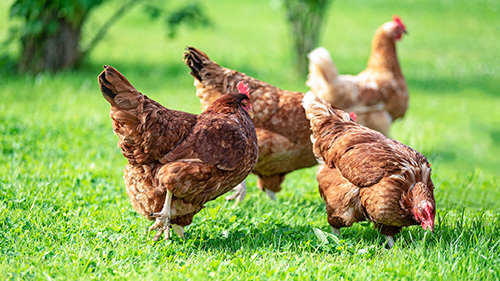 entire middle of the country. You are also paying to keep a second market alive so the first one cannot dictate every term.
There are a number of good meat-box companies out there but we settled on Wild Pastures after researching the market and we have been quite happy with them. And no, I do not have any kind of affiliate agreement or any other connection to them other than as a customer.
Trust me, we are not rich or even wealthy. We are retired and live on a fixed income with few part-time gigs on the side. But for us, it is well worth the extra we pay for a box of healthier meat that does not come from a massive, greedy and corrupt corporation that will do whatever they can get away with to increase their profits. If that includes worsening health for the people that consume their products, they’re fine with it. You shouldn’t be.
I am not asking anyone to romanticize farming. Small producers fail too. Some “natural” labels have been sloppy. Grass-fed is not a magic word if the farm is sloppy or the processor is a thousand miles away with no accountability. (Pro tip: “Grass Fed” allows animals to be finished on grain and “Grass Finished” means the animal was 100 percent raised on grass) Ask who raised the animal, what it ate, whether hormones and routine antibiotics were used, where it was slaughtered, and whether you can get a straight answer. If the only answer is a brand owned by a packer that already controls a quarter of the kill, that is not transparency. That is marketing.
If you eat meat, your dollars are a vote for a supply chain. The Big Four would like that vote to stay automatic: cheap trays, familiar logos, no questions about who owns the plant or how the animal was finished. I would rather send the money to farms that still have to care what the neighbor thinks of the pasture. Order a box. Split it with family. Find a local butcher who actually buys from independent producers. Pressure USDA to make small-plant inspection and interstate sales workable instead of treating a family kill floor like a threat to a multinational line.
Four companies should not stand between American livestock and an American dinner table. They do. Until that changes, the honest move is to stop feeding the bottleneck.